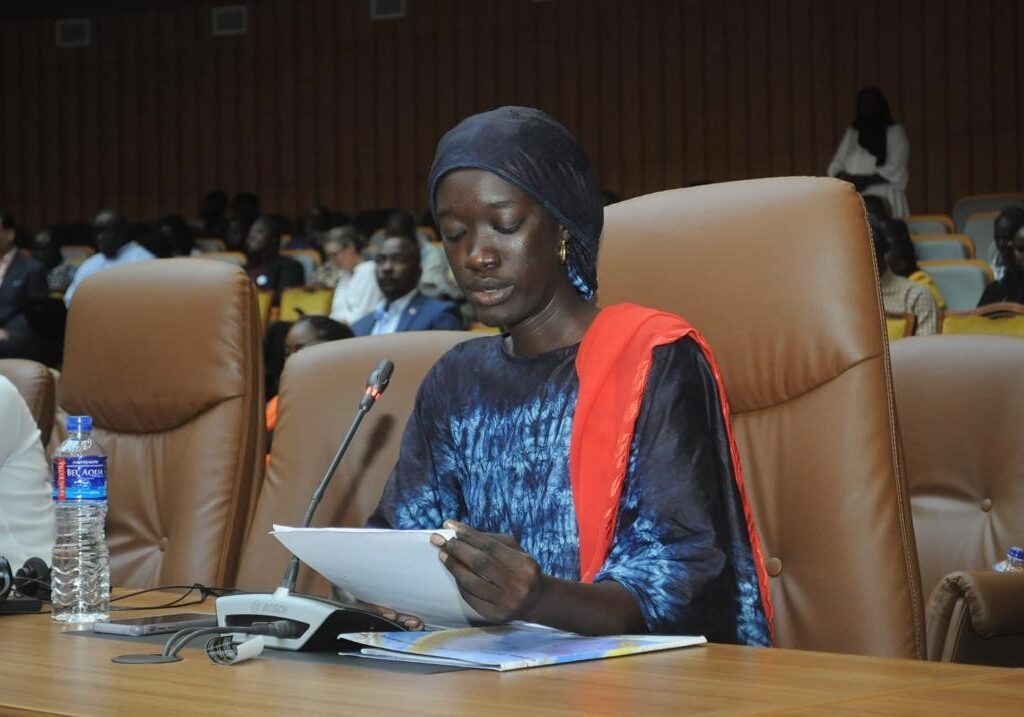

For two months, Agir ensemble pour les droits humains had the privilege of hosting and supporting Alima Taal, a human rights defender (HRD) campaigning against Discrimination based on Work and Descent (DWD) in The Gambia.
DWD refers to situations where communities are assigned a permanent status linked to traditional occupations or castes, leading to lifelong exclusion, stigmatisation and restricted access to their most fundamental rights.
According to the UN Working Group on Inclusion and the Elimination of Discrimination based on Work and Descent, an estimated 260 million people worldwide are victims of this human rights violation. Far from being limited to Africa, discrimination based on work and descent is also widespread in Europe, Asia, the Middle East and within diaspora communities.
What makes this form of discrimination particularly harmful is its structural and hereditary nature. It is transmitted from generation to generation and is embedded in social norms, traditions and informal power structures.
Because this form of discrimination is normalised, it often goes unnoticed and is rarely challenged.
This is why human rights defenders who call into question this established order are regularly targeted and face strong resistance from institutions, the government and the general public.
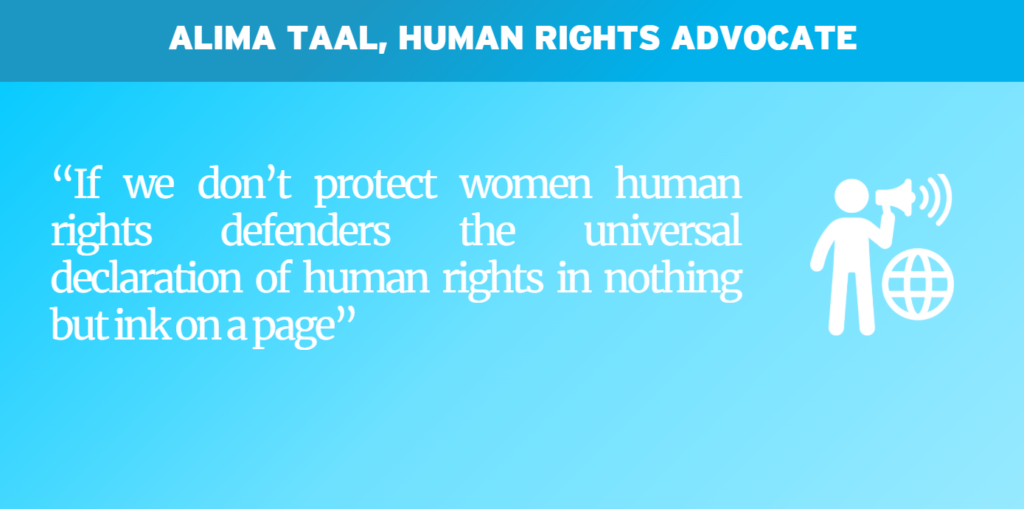
However, these various obstacles have not dissuaded Alima Taal, a Gambian human rights defender, from advocating against these structural forms of discrimination. Alima began her work as a human rights defender with the SOS Children’s Villages association in The Gambia before continuing her efforts with the Global Forum of Communities Discriminated on Work and Descent (GFoD). Her numerous interventions within international organisations such as the African Commission on Human and Peoples’ Rights (ACHPR) have notably led to the adoption of a resolution urging African states to recognise the existence of DWDs on the continent.
Having faced numerous obstacles and threats whilst working on the ground, Alima was welcomed to Lyon by Agir ensemble pour les droits humains as part of the Lyon Ville Refuge project, which offers temporary relocation to human rights defenders in danger.
This programme, run in close collaboration with the City of Lyon, has enabled Alima to build its capacity by attending specific courses at UCLY, expanding its network whilst also having the opportunity to take French lessons – a language that is particularly important for its advocacy work within UN bodies.
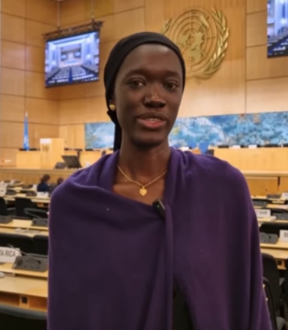
Following this period of respite in Lyon, Alima continued her activism by moving temporarily to New York to carry out advocacy work at the UN, a body at the heart of international debates and decision-making processes aimed at better protecting human rights worldwide.

[OFFRE DE CDD] Chargé.e de projets et de partenariats
Dans le cadre des projets « Dignité en Détention» (visant à renforcer la prise en compte et l’application des droits humains dans les établissements pénitentiaires du Gabon) et « Agir Contre Toutes les formes de Violences Basées sur le Genre » (qui vise à contribuer à la mise en place

Projet « Bunto on’oboolo » (Femmes courageuses)
Agir ensemble pour les droits humains (AEDH) et la Solidarité pour la Promotion des Femmes Autochtones (SPFA) réaffirment, grâce à ce projet, leur engagement pour renforcer la protection et l’impact des femmes leaders Autochtones en province de l’Équateur, en République Démocratique du Congo (RDC). Protection de l’environnement et des populations

[OFFRE DE CDD] Assistant.e de gestion sociale et RH
Agir ensemble pour les droits humains (AEDH) recrute un·e assistant.e de gestion sociale et de ressources humaines. Le poste vise à contribuer notamment à assurer le suivi des procédures de recrutement et d’intégration et à centraliser les informations et documents pour la réalisation de la DPAE en lien avec le